

Key Takeaways
- No strong business plan works without marketing. It’s not just support—it’s what helps your business grow.
- Small and mid-sized businesses need to view marketing as an investment, rather than an expense.
- Marketing isn’t just about getting noticed; it’s about building trust, driving sales, and supporting long-term growth.
You might already have the key to growing your business—it’s your marketing.
Remember Apple’s “Think Different” campaign? It featured black-and-white photos of rebels like Einstein and Gandhi, challenging people to think differently, be innovative, and change the world.
It’s time to think differently about marketing. Many business owners still see it as just another expense. But what if that thinking is backwards?

Marketing isn’t a cost—it’s what fuels your growth. Without it, even the best product can go unnoticed.
At Brandmark Studios, we see this in action every day. For example, we helped one client increase their Google Ads conversions by over 350% in just one year, resulting in more qualified leads and driving meaningful business growth.
In this article, we’ll explore how marketing grows your business, why going quiet can hold you back, and practical strategies you can use today to move forward.
By the end, you’ll see how thoughtful, consistent marketing directly fuels your sales pipeline and long-term results.
How Marketing Drives Business Revenue
Marketing isn’t magic—it’s a steady, practical way to grow your business:
- It helps people find you. You can’t sell what people don’t know exists. Marketing introduces your business to the right audience and builds interest.
- It brings in the right people. Good marketing attracts qualified leads and supports them along the way.
- It turns interest into sales. Clear messaging and simple calls to action make it easier for people to choose you.
- It keeps customers coming back. Marketing doesn’t stop after the sale. Staying connected keeps your brand top-of-mind and builds loyalty over time.
- It shows what’s working. Marketing analytics help you understand where to invest so you can grow smarter and faster.
Marketing Throughout the Customer Journey
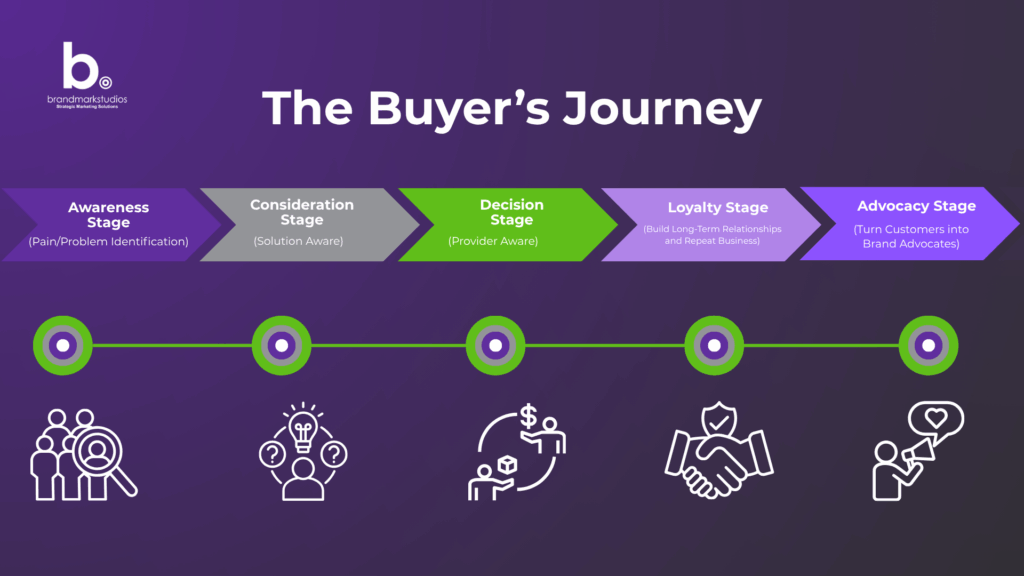
The buyer’s journey is the path people take when deciding what to buy. It typically includes four stages: Awareness, Consideration, Decision, and Loyalty.
What’s often missed? People are in different mindsets and emotional states at each step. Some are simply curious, some are comparing options, and others are ready to commit.
Strategic marketing meets customers exactly where they are:
- Awareness: “I have a problem” – Marketing introduces your business as a trusted resource and demonstrates understanding of their challenges.
- Consideration: “I’m exploring solutions” – Marketing educates prospects about your approach and builds confidence through case studies and success stories.
- Decision: “I’m ready to choose” – Marketing provides compelling offers, addresses objections, and makes taking the next step easy.
- Loyalty: “I want ongoing value” – Marketing keeps your brand top of mind, delivers continued support, and creates new opportunities for repeat purchases.
- Advocacy: “I want to share my experience” – Marketing empowers satisfied customers to recommend your brand, leave reviews, and actively promote you to their networks.
“Without intentional marketing efforts, potential customers get stuck at each stage,” says Betsy Brand, founder/CEO of Brandmark Studios. “Marketing is the critical ingredient that creates the momentum that turns interest into sales,” she adds.
The Cost of Going Quiet: What Happens When You Stop Marketing
When businesses stop marketing, they don’t just pause growth—they go backward. Here’s what happens:
You lose visibility. Even loyal customers can forget about you. Consistent marketing keeps your brand top-of-mind so customers return instead of drifting to competitors.
Competitors step in and take attention. Others fill the gap you leave behind, taking market share and making it harder for you to recover.
Fewer leads and slower sales. Your sales pipeline dries up as fewer people discover your business or remember to choose you.
Your story gets lost. Without your voice in the market, your brand story fades or gets replaced by assumptions and competitor messaging.
Customers feel less connected to your brand. The emotional connection weakens over time, making it harder to regain trust and loyalty later.
Going quiet isn’t a pause—it’s giving your competitors a running head start.
The Highest Revenue Generating Marketing Strategies for Small Businesses
Not all marketing is created equal. Some strategies create short-term spikes. Others build long-term growth. These four consistently deliver:
- Content Marketing
The most successful small businesses don’t just sell—they teach. Content marketing builds trust by positioning you as the go-to expert in your field. For example, a local bakery that shares sourdough tips consistently will soon become the trusted source for baking knowledge, not just bread.
This isn’t about posting random content. It’s about creating blog posts, social media content, and thought leadership pieces that solve real customer problems.
Impact: Content marketing generates 3x more leads than traditional marketing while costing 62% less.
- UX + Website Optimization
Your website is often your first impression, and you only get one chance to make it count. A seamless user experience with clear navigation, fast load times, and mobile optimization can be the difference between a visitor and a customer.
Great website experiences don’t just convert visitors—they create a ripple effect. Happy users become referrals, and satisfied customers return for more services.
Case Study: Our comprehensive rebranding and website development for AvantGuard helped establish their new brand identity and digital presence, contributing to major product redefinitions with over $70 billion in potential market impact.
- Search Engine & AI Search Optimization
When someone searches for your services, you want to be found. Local SEO campaigns put your business on the map—both literally and figuratively—by helping customers discover you at the exact moment they need your services.
AI is reshaping how people find local businesses, making optimization more important than ever.
Case Study: UCE Fine Builders saw a 57% increase in organic impressions and 37.5% improvement in rankings in 8 months.
- Paid Advertising (Google + Meta)
When done right, paid advertising offers something rare in marketing: immediate, trackable results. The key is focusing your budget on high-intent keywords and audiences most likely to convert, not just casting a wide net and hoping for the best.
Small businesses love paid advertising because they only pay for results and can track exactly how much revenue each campaign generates.
Case Study: We increased OrthoConnecticut’s monthly conversions from 140 to 634 while maintaining 20-25% conversion rates.
Metrics That Matter
When it comes to growing your business, tracking the right numbers makes all the difference. You don’t need complicated dashboards or endless spreadsheets—you need clear, simple data that shows what’s working.
Here are the key metrics that small and mid-sized businesses (SMBs) should focus on:
- Return on Investment (ROI): This tells you if your marketing is paying off. For every dollar you spend, how much are you making back?
- Customer Acquisition Cost (CAC): How much does it cost to bring in a new customer? Lower is obviously better.
- Customer Lifetime Value (CLTV): This shows how much revenue a customer brings in over the long run. The longer they stay, the more valuable they become.
- Conversion Rates: How many people take action after seeing your marketing? Whether that’s clicking a link, signing up, or making a purchase, this tells you if your marketing is working.
At Brandmark Studios, we make these numbers easy to understand. Our reports and dashboards are built with busy SMBs in mind—clear, simple, and focused on what actually drives growth. You’ll always know where your money’s going and how your marketing is performing.
If you’re ready to grow smarter, we can help you track what really matters.
Building Sustainable Marketing Revenue
Marketing isn’t an expense—it’s your most important strategic investment. The businesses thriving today capitalize on marketing as an asset that compounds returns over time.
Transform marketing from expense to strategic investment. Here’s what small and mid-sized businesses can do right now:
- Investment mindset: Evaluate every marketing dollar like any business investment
- Portfolio approach: Diversify across content, SEO, and paid advertising for balanced growth
- Content as assets: Every piece continues working long after creation
- Data-driven optimization: Use performance data to guide all decisions
- Integrated campaigns: Align website, content, social media, and advertising efforts
- Consistent execution: Maintain marketing through market changes for the highest returns
The right marketing strategy doesn’t fade—it compounds, fuels growth, and keeps working for you.
Final Thoughts
Stop letting competitors capture customers who should choose your business. The companies seeing exponential growth commit to long-term investment in marketing. They stay adaptive, let data guide decisions, and integrate every effort to work together.
When you treat marketing as a revenue-driving asset, you build market resilience, create easier sales through brand recognition, and develop relationships that generate recurring revenue.
Ready to make the investment? Let’s turn your marketing into a growth engine that drives real, measurable results. Book your free consultation today!
FAQs
How does marketing drive revenue?
Marketing drives revenue by increasing brand awareness, generating leads, nurturing prospects through the sales funnel, and converting potential customers into paying customers.
What is marketing-influenced revenue?
Marketing-influenced revenue is the total revenue from deals where marketing activities touched the customer at any point during their buyer journey, even if marketing wasn’t the final converting touchpoint.
Is marketing considered revenue-generating?
Yes, marketing is considered revenue-generating because it directly contributes to customer acquisition, retention, and expansion. Although it’s typically measured as a cost center, it drives revenue rather than generating it directly, like sales.
How does content marketing drive revenue?
Content marketing drives revenue by educating prospects, building trust and authority, enhancing SEO to attract organic traffic, nurturing leads with valuable information, and guiding potential customers toward informed purchase decisions.