

Key Takeaways
- SEO (Search Engine Optimization) helps your business get found across search engines like Google and emerging platforms like ChatGPT, by improving your search visibility in both traditional and AI-powered results, driving more organic traffic.
- Unlike paid advertising, SEO is a cost-effective, long-term strategy that enhances credibility and drives sales, creating sustainable visibility that grows exponentially over time.
- Even small businesses can compete with larger companies by understanding and strategically implementing key SEO elements.
When Coach Mike opened his youth baseball training academy in Connecticut, he had the experience, the equipment, and a great facility. What he didn’t have? Online visibility. Parents searching for “baseball lessons near me” or “Connecticut baseball coach” weren’t finding his website.
Across town, a smaller program with fewer amenities and higher prices was fully booked. The difference? That coach understood the power of SEO.
If you’ve ever wondered why some local businesses dominate Google search results and show up in AI results, while others stay invisible, you’re about to find out! Read on to learn how to make sure your business is the one your target audience finds first.
What Is SEO?
SEO stands for “Search Engine Optimization,” but let’s break that down into plain English. Think of SEO as making your website more engaging and understandable to your target audience and search engines like Google, so they’re more likely to show your business when people search for what you offer.
SEO ensures search engines can easily discover, comprehend, and suggest your business to prospective clients. A robust SEO strategy will also directly influence your visibility in AI overviews and large language models (LLMs) such as ChatGPT, Claude, and Perplexity.
So, how does it work? At its core, SEO involves optimizing your website’s content, structure, and authority so search engines recognize it as providing the best answer to someone’s search query.
SEO dictates whether your restaurant appears prominently in search results (like Google or ChatGPT) or remains unseen on page five (where no one will see it!) when someone searches for “best Italian restaurant near me.”
How Search Engines Work
Let’s think about how Google works for a minute. It operates like an incredibly efficient librarian, managing the world’s most extensive library and carefully ranking and organizing content to match exactly what users are searching for.

Crawling is like the librarian sending out assistants to discover every book (webpage) in existence. These “web crawlers” constantly browse the internet, following links from page to page, discovering new content and updates.
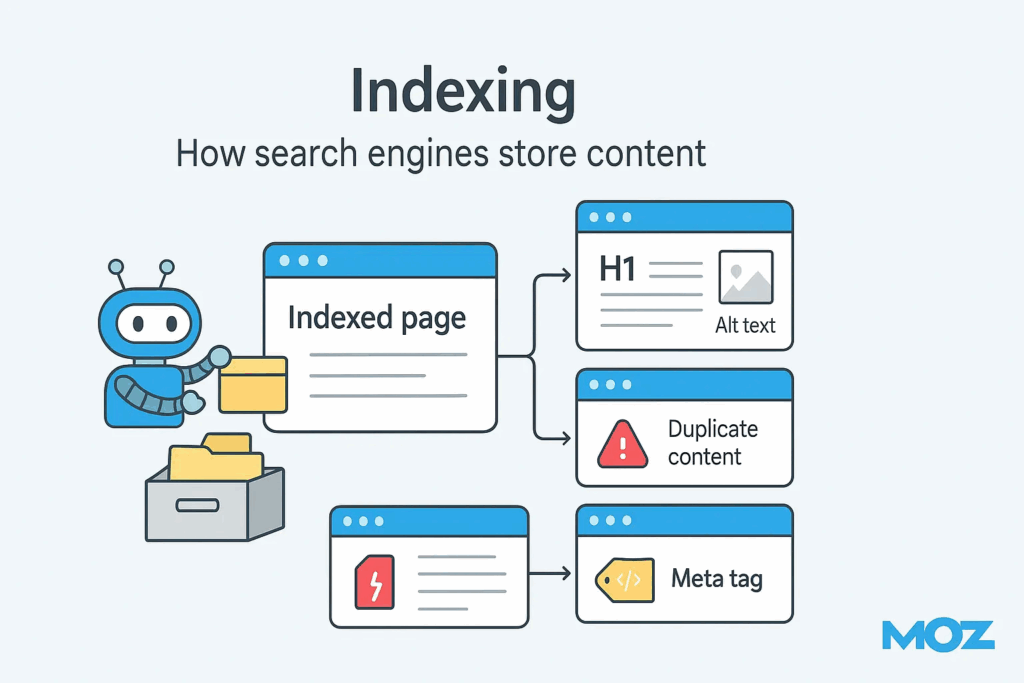
Indexing is the process of organizing and storing information about each webpage they find. The librarian catalogs every book by topic, quality, author credibility, and relevance, creating a massive, searchable database.
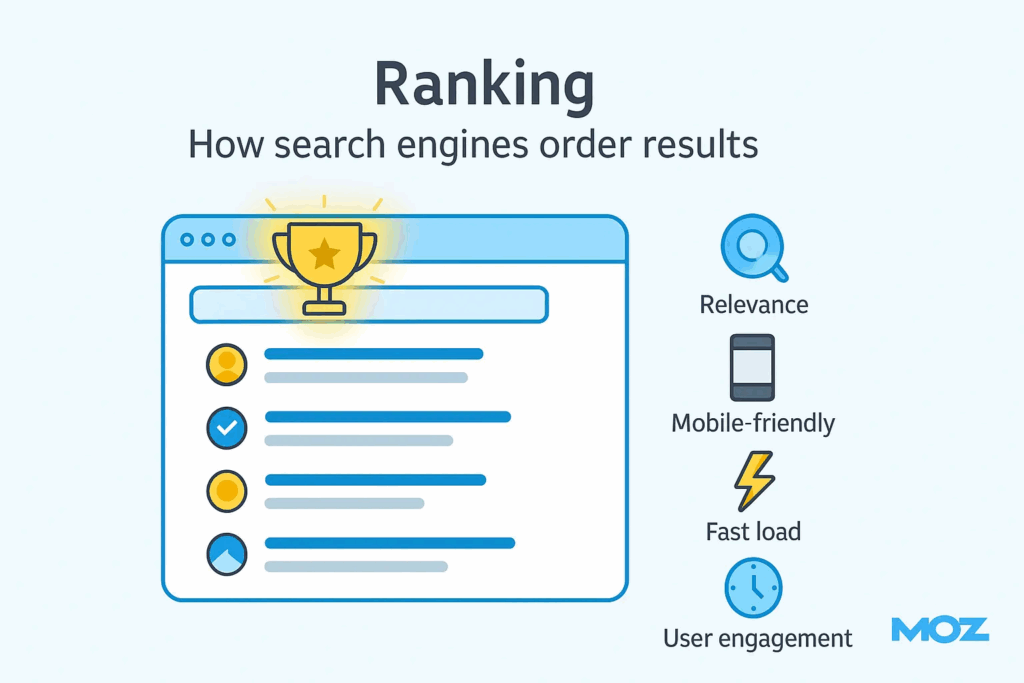
Ranking happens when someone asks the librarian a question. Based on the query, the librarian instantly sorts through millions of cataloged pages and presents the most relevant, trustworthy, and helpful results in order of quality and relevance.
Boost Visibility with Google’s AI Overviews
Now that we understand how Google organizes and ranks content, let’s look at how to make your content eligible for AI Overviews. These are Google’s new AI-generated summaries that appear at the top of some search results. Often appearing before traditional search listings, inclusion can significantly boost your visibility and drive more traffic to your site.
To show up in Google’s AI Overviews, your page just needs to be searchable and follow basic SEO best practices. No extra technical steps are required. Make sure your content is easy for Google to find through internal links, readable in text form, and not blocked in your site settings.
Most importantly, focus on creating high-quality, trustworthy content that clearly answers common questions in a natural, conversational tone. This helps meet Google’s E-E-A-T guidelines (Experience, Expertise, Authoritativeness, Trustworthiness) and increases your chances of being featured in AI-powered search results.
5 Reasons Why SEO Matters for Your Business
1) Dramatically Increase Your Online Visibility and Traffic
Here’s a sobering fact: 75% of users never scroll past the first page of search results, and the top three results get 60% of all clicks. If your business isn’t ranking on page one, most potential customers won’t see you.

Our client, UCE Fine Builders, saw a 57% increase in organic impressions and a 37.5% improvement in rankings in just eight months of SEO work. That kind of visibility leads to more clicks, more inquiries, and more business.
Unlike traditional ads that show up whether or not someone’s interested, SEO connects you with people actively searching for your services.
2) Build Trust and Credibility With Customers
When your business ranks naturally at the top of search results, people instinctively see it as more credible.
This trust goes beyond rankings. High-ranking sites tend to earn more backlinks (links from other websites), positive reviews, and social mentions—all signals that reinforce authority.
Google favors sites that demonstrate E-E-A-T: Experience, Expertise, Authoritativeness, and Trustworthiness. When your content, reviews, and reputation reflect these qualities, you gain higher rankings, and with them, lasting credibility.
3) Deliver Better ROI Than Most Marketing Channels
SEO delivers one of the highest long-term returns of any marketing strategy. Unlike paid ads, which stop working the moment you stop spending, SEO builds momentum and continues driving traffic over time.
It’s one of the only marketing channels that grows in value over time, delivering ongoing results instead of fading after a short burst of visibility like ads or social posts.
Here’s a breakdown of essential SEO methods, how they work, and their effect on visibility and return on investment (ROI).
SEO vs. Paid Ads Comparison Table
| Focus Area | SEO | Paid Ads |
| ROI Potential | ~550% (long-term) (DigitalPosition) | ~200% (short-term) |
| Conversion Rate | 14.6% (Adcore) | 10% (Adcore) |
| Cost Structure | Upfront investment, no per-click costs | Pay-per-click, ongoing costs |
| Time to Results | Months to years. | Immediate |
| Sustainability | High, traffic continues without additional spend | Low, traffic stops when the budget ends |
| Best For | Long-term growth, brand credibility | Short-term campaigns, precise targeting |
4) Support Your Entire Customer Journey
SEO isn’t just about driving traffic; it’s about attracting the right traffic at the right time. Different types of searches correspond to different stages of the customer journey:
- Awareness Stage: Someone searches “how to choose a financial advisor” because they’re beginning to recognize they need professional help. Educational content that ranks for these searches introduces your expertise early in their decision process.
- Consideration Stage: They progress to searches like “fee-only vs commission financial advisors” or “best financial advisors in Portland.” Comparison content and detailed service explanations help them evaluate their options.
- Decision Stage: Finally, they search “financial advisor Portland reviews” or “certified financial planner near me.” Local SEO and reputation management ensure your business appears when they’re ready to choose.
- Loyalty Stage: After someone becomes a client, they might search for things like “what to ask in a financial check-in” or “how to plan for taxes with my advisor.” SEO content that supports these follow-up questions helps you stay helpful after the sale, strengthens the relationship, and keeps people coming back.
The benefits of SEO for business become apparent when you realize that by ranking for searches across all these stages, you’re building relationships with potential customers from their first moment of interest through their final purchasing decision and long-term client loyalty.
5) Show Up in AI-Powered Search
The search landscape is evolving rapidly. More people are turning to AI tools like ChatGPT, Perplexity, and Google’s Search Generative Experience (SGE) to ask questions and get instant answers. These AI systems rely heavily on high-quality, well-optimized website content (sources) to generate accurate responses.
By investing in SEO, you’re positioning your content to be discovered not only through traditional search rankings and Google’s AI Overviews, but also as source material for AI-generated responses across various AI platforms that cite their references.
This creates new opportunities for brand visibility and thought leadership. When your content consistently appears as a cited source in AI-generated answers, you build recognition as a trusted authority in your industry, even among users who may never have discovered your brand through traditional search.
Key Elements of SEO Website Optimization
Understanding these 3 core elements of SEO helps you focus your efforts and avoid common mistakes.
- On-Page SEO
- Off-Page SEO
- Technical SEO
Think of these as the foundation of your strategy. Each one supports your site’s visibility and performance.
Pro Tip: When optimizing for search, start with pages that drive business impact. Prioritize bottom-of-funnel pages, such as service or product pages, since they typically convert visitors into customers. A high-ranking blog won’t help if it leads to a broken product page.

On-Page Optimization
On‑page SEO is all of the optimization work you do directly on your web pages. It helps search engines understand your pages and shows them to the right people.
Search Intent
Start by identifying what your audience is searching for and why they are searching for it. Group queries into four intent types: informational (learning), navigational (finding a site), commercial (researching before buying), and transactional (ready to buy). Use tools like Google’s “People Also Ask” and related searches to uncover deeper needs. Analyze keyword volume, difficulty, and competitor content to spot gaps. Then, create content tailored to each intent: how-to guides for informational purposes, comparison charts for commercial use, and product pages for transactional purposes. Aligning content to search intent boosts both user satisfaction and rankings.
Content Gaps & Competitor Analysis
Perform a content gap analysis to identify where your content falls short compared to competitors. Spot missing topics, unanswered questions, or weak content. By studying top-ranking competitors and seeing what they cover that you don’t, you can fill those gaps and gain visibility.
Title Tags and Meta Descriptions
Title tags are the blue clickable headlines you see in Google search results and browser tabs. They should clearly describe your page content and include keywords. Meta descriptions are brief text snippets below titles that summarize the content of your page. You should follow title tag and meta description best practices to help your website rank higher and encourage clicks on your content.
Internal Linking
Internal links are clickable links within your content that connect to other pages on your site, like doors between rooms in a house. They help visitors find related content and helps Google understand your site structure, improving your search rankings.
URL Structure
Your page URLs (web addresses) should be short and descriptive. Use hyphens between words, lowercase letters, and avoid stuffing keywords. Static URLs (such as /about-us) are more effective than dynamic ones that include numbers and symbols generated by databases.
Off-Page SEO
Off-page SEO is all about building your website’s authority and credibility in the eyes of search engines, AI, and potential customers by strengthening its presence beyond your website.
Google Business Profile & Local Citations
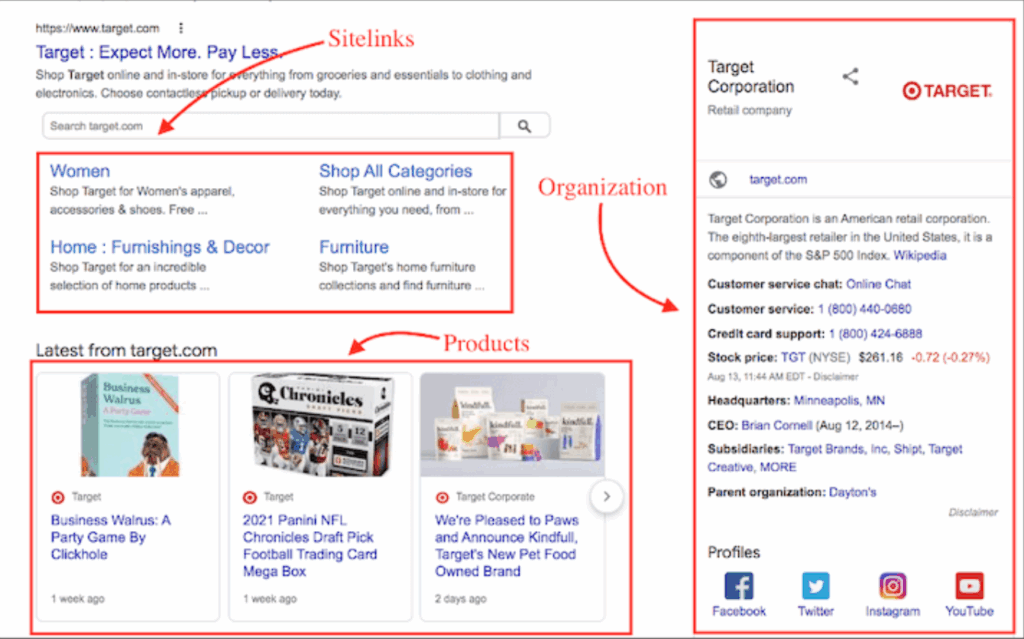
For local businesses, a fully optimized Google Business Profile (GBP) allows your business to appear in local map packs and drives more visibility for “near me” searches. Setting up a Google Business profile is low-hanging fruit that can yield huge benefits, making it one of the most important Local SEO strategies we recommend to our local business clients.
Also, make sure your business is consistently listed on major directories (like Yelp, Apple Maps, and Bing Places) with accurate NAP (name, address, phone) information. These local citations help reinforce your legitimacy in local search results.
Backlink Building
Backlinks remain a key ranking factor. High-quality links from reputable websites signal to Google that your content is trustworthy and valuable. You can earn backlinks through guest posting, digital PR, content partnerships, and by creating content worth linking to (like data-driven studies or helpful resources).
Online Reviews & Reputation
Search engines, AI, and people all trust businesses with strong, recent reviews. Encourage satisfied customers to leave reviews on Google and other relevant platforms (Yelp, Facebook, Healthgrades, etc., depending on your industry). Responding to reviews (both positive and negative) also helps build trust and improve engagement.
Social Media Presence
While social media signals aren’t direct ranking factors, having an active, engaging presence helps distribute your content, build brand awareness, and drive traffic back to your website. The more your content is shared and talked about, the more likely it is to earn links, mentions, and attention.
Technical SEO
The highest-ranking sites are fast-loading, secure, and optimized for mobile devices. These technical factors directly impact how users experience your site and how AI and search engines rank it:
Page Speed
Pages that take more than three seconds to load lose over half of mobile visitors. Google uses speed as a ranking factor, favoring fast-loading pages. Speed up your site by:
- Compressing images (keep under 500kb each)
- Enabling browser caching so files load faster on repeat visits
- Removing unnecessary code and minimizing CSS, JavaScript, and HTML files
- Using lazy loading to delay loading images until users scroll to them
- Using a Content Delivery Network (CDN) to serve content from servers closer to your visitors
Mobile Optimization
Google primarily uses your site’s mobile version to determine rankings, so mobile performance is crucial. Ensure your site uses responsive design (automatically adjusts to screen size), has minimal pop-ups, readable fonts, easily tappable buttons, and fast-loading images.
HTTPS Security Protocol
Google prioritizes secure websites with HTTPS encryption, which also builds visitor trust. Without HTTPS, browsers show warning messages that scare visitors away. Get an SSL certificate through your hosting provider or free services like Let’s Encrypt. When switching from HTTP, set up 301 redirects and update your sitemap.
Schema Markup
Schema markup is code that helps search engines and AI better understand your content by tagging details like ratings, authors, and dates in a structured format. While not required for AI features, schema markup supports better indexing, richer search results, and improves chances of appearing in AI-generated summaries.
Make SEO Work for You
Search engine optimization is more than just a marketing tactic. It’s arguably one of the most important pieces of any digital marketing plan and a foundational business strategy that compounds in value over time. SEO continues to deliver results months and years after your initial investment, while also future-proofing your content for the AI-driven search landscape where your expertise can be discovered and referenced across multiple AI platforms and tools.
The businesses that succeed with SEO treat it as a long-term commitment, not a quick fix. They understand that building authority and trust takes time, but the payoff is worth the wait: sustainable organic traffic filled with high-intent prospects who are actively searching for their solutions and ready to buy.
FAQs
How does SEO help your business grow?
SEO helps grow business by boosting your visibility in search results, driving website visitors who are actively searching for solutions you provide, and building credibility through consistent, helpful content that ranks well.
Is SEO worth it for a small business?
Yes. SEO generates long-term traffic and leads without ongoing ad spend, making it one of the most effective ROI marketing tactics.
Is SEO still relevant in 2025?
SEO remains highly relevant in 2025, although it continues to evolve. Google still processes over 8.5 billion searches daily, and users still trust organic results more than paid ads. While AI is changing how people search and how Google provides answers, the fundamental principles of SEO (creating helpful content, providing an excellent user experience, and building authority) remain crucial.
How much should a small business spend on SEO?
SEO investment varies depending on a business’s size, level of competition, and specific goals. Many small businesses see good results investing $500-$2000 monthly in SEO, whether through DIY efforts, tools, and education, or hiring professional help.
Can I do SEO myself, or should I hire an expert?
You can start with basics, such as content, keywords, and Google tools. However, technical SEO, link building, and advanced optimization often benefit from the expertise of professionals.
What are the biggest SEO mistakes to avoid?
Overusing keywords, ignoring mobile optimization and page speed, buying low-quality backlinks, duplicating content, and expecting fast results are common SEO errors. Additionally, avoid these common pitfalls: ignoring valuable data from Google Search Console and Analytics, focusing exclusively on rankings instead of user engagement, and writing content that serves algorithms rather than answering real user questions.
Is SEO still important now that AI is answering search queries?
The rise of AI Overviews and answer engines hasn’t eliminated the need for solid SEO—it’s redefined success. Today’s strategy centers on building comprehensive topical expertise that makes your content the authoritative source AI systems cite, rather than simply ranking for individual keywords.