Key Takeaways
- Define your audience, offer, conversion goal, traffic source, and tracking plan before you begin designing or writing your landing page.
- Match your landing page messaging to your campaign, address the visitor’s needs, build trust, and guide them toward one clear action.
- Use conversion data and controlled A/B tests to learn what resonates, improve performance, and generate more qualified leads over time.
What is a Landing Page?
A landing page is a standalone web page built for a single purpose: getting visitors who click an ad (or an email or social post) to take one specific action, like booking, signing up, or requesting a quote. It’s called a landing page because it’s where people “land” after they click.
Unlike your homepage, which has menus and links to everything you offer, a landing page removes distractions and focuses on one offer and one next step. For example, someone who clicks an ad for a “free roof inspection“ lands directly on a page about that inspection, with a short form to book it, instead of arriving at a general homepage where they’d have to sift through other content to find it.
Landing Pages Turn More Ad Clicks Into Leads
A landing page can make or break the success of a paid advertising campaign. We often see businesses invest in ads on Google, social platforms, or newer channels like ChatGPT, only to send visitors to a page with unclear messaging, too many distractions, or no compelling reason to take action.
High-converting landing pages are not built from a single template. They combine a clear strategy, audience-focused messaging, a strong offer, reliable conversion tracking, and ongoing testing.
In this guide, we’ll walk you through the practical process we use to plan, build, and optimize landing pages that turn more paid clicks into qualified leads.
Establish Your Content Foundation
Before writing your landing page, get clear on who it is for and what you want it to accomplish. Answering these fundamental questions will help you establish your content foundation:
- Who is the page for? (target audience)
- What problems and pain points do they have?
- What do you want them to do? (Call to action – Book, inquire, sign up, etc)
- Why should they do it?
- Where do they come from? (Facebook, Google, Newsletter, etc)
- What are you going to measure?
Establish a Technical Foundation
Before sending traffic to your landing page, make sure the technology behind it can support the campaign.
Choose a platform your team can easily build, edit, and test without creating unnecessary delays. The right tool depends on your existing website, internal resources, and how often you expect to create new pages.
Conversion tracking should be set up before the campaign launches, not after leads start coming in. Connect the page to Google Analytics and your advertising platform so you can accurately track form submissions, calls, bookings, purchases, or whichever action matters most.
You may also need to connect the landing page to tools such as your CRM, email platform, scheduling software, payment system, or call-tracking service. Testing these integrations in advance helps prevent lost leads and ensures every inquiry reaches the right person.
Research Your Audience
A strong landing page should make visitors feel like you understand exactly what they are dealing with. That requires more than knowing their age, job title, or location.
Look closely at what your audience wants to achieve, what has frustrated them in the past, and what alternatives they may already have tried. Pay attention to the language they use to describe their problems, concerns, and desired outcomes. Using those same words on your landing page can make the message feel more relevant and trustworthy.
Pro Tip: Some of the best insights are already inside your business. Review sales calls, customer questions, testimonials, and objections your team hears repeatedly. In our experience, the objections that come up again and again on sales calls almost always end up making the strongest FAQ content later.
You can also study customer reviews, search data, Google Trends, “People also ask” results, and audience research tools to uncover the questions and concerns shaping buying decisions.
The goal is not to guess what your audience cares about. It is to build the page around what they have already told you.

Craft a Compelling Offer
Your landing page should offer more than information. It should give visitors a clear reason to take the next step.
The right incentive depends on the campaign. It might be a free consultation, estimate, assessment, trial, discount, guide, or another resource that helps the visitor solve an immediate problem. The offer should feel valuable enough to justify the information or commitment you are requesting.
Urgency or scarcity can also encourage action, but only when it is genuine. A real deadline, limited appointment availability, seasonal promotion, or capped number of participants can help visitors make a decision. Invented countdowns and false scarcity are more likely to damage trust.
The strongest offer is not always the largest discount. It is the one that makes taking the next step feel easier, more valuable, or less risky.
Write Your Landing Page Copy
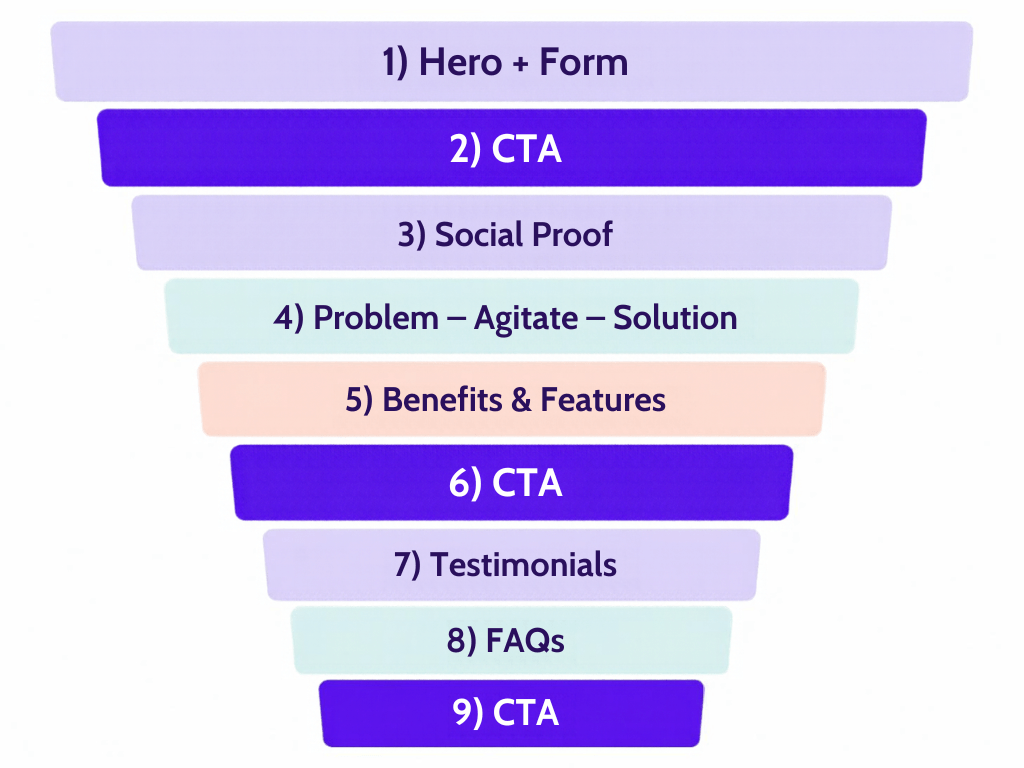
A strong landing page guides visitors through one clear decision. While the exact length and order may vary, each section should serve a specific purpose and move the reader closer to taking action.
With Google’s AI-powered campaign settings, the wording on your page can help decide which searches trigger your ads. This is another reason each page should focus on one specific service or offer instead of listing everything you do.
Hero and Form
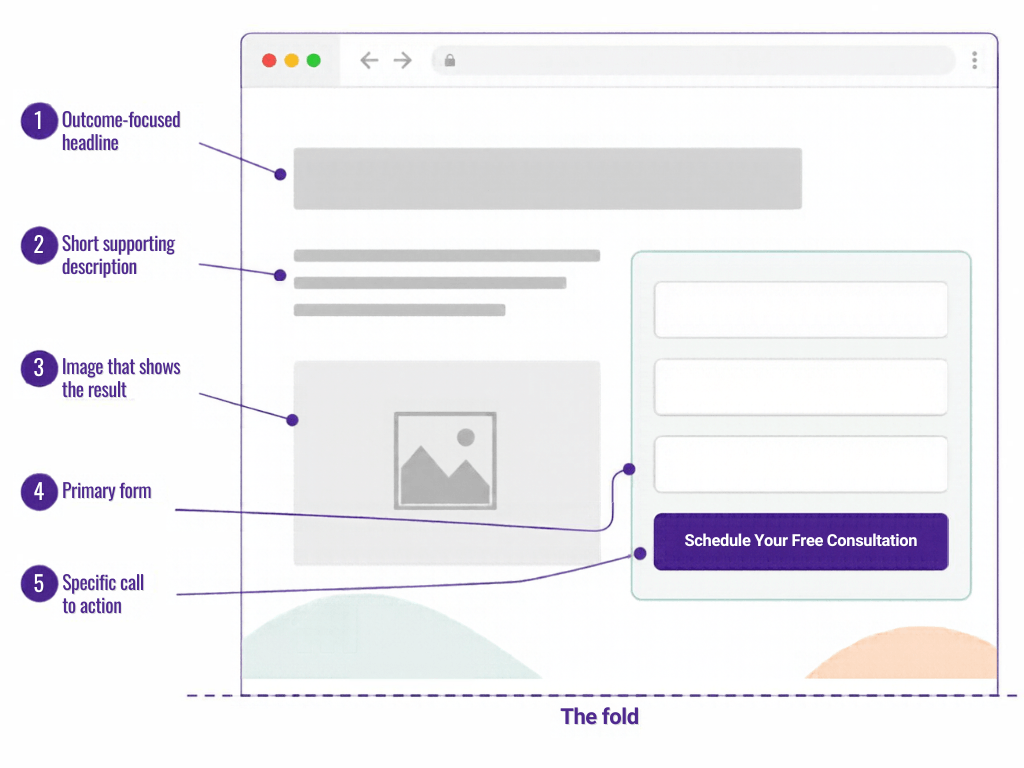
The top of the page should immediately explain what you offer, who it is for, and how it will help. Lead with a clear, outcome-focused headline, followed by a short description that adds context without overwhelming the visitor.
Your image should support the message by showing the product, service, or desired result. Place the primary form or action close by so visitors who are ready can respond without scrolling or searching.
Adding your primary form or call to action (CTA) above the fold (meaning it’s visible without scrolling) makes it incredibly easy for people to convert if they are ready.
Calls To Action (CTA)
Your landing page should focus on one primary action, such as requesting an estimate, scheduling a consultation, calling your business, or signing up.
Place the first call to action near the top of the page, repeat it after explaining the value of your solution, and include it again at the bottom. Keep the action consistent throughout the page so visitors are never forced to decide between competing next steps.
Use specific language that tells people what will happen after they click. “Schedule Your Free Consultation” is clearer and more persuasive than “Submit” or “Get Started.”
Social Proof and Testimonials
Visitors need evidence that your business can deliver. Reviews, testimonials, ratings, client logos, awards, certifications, and measurable results can all reduce uncertainty and make the decision feel less risky.
The strongest testimonials explain the customer’s original problem, their experience working with you, and the result they achieved. Whenever possible, include identifying details such as a name, company, role, or photo to make the feedback feel credible.
Pro Tip: Social proof should be used throughout the page rather than confined to one section. A short review near the top can establish early trust, while more detailed testimonials can reinforce your claims later.
In a Google Ads campaign we ran for OrthoConnecticut targeting Minimally Invasive Bunion Surgery, we utilized both a video testimonial and Google reviews on our landing page:


Problem – Agitate – Solution
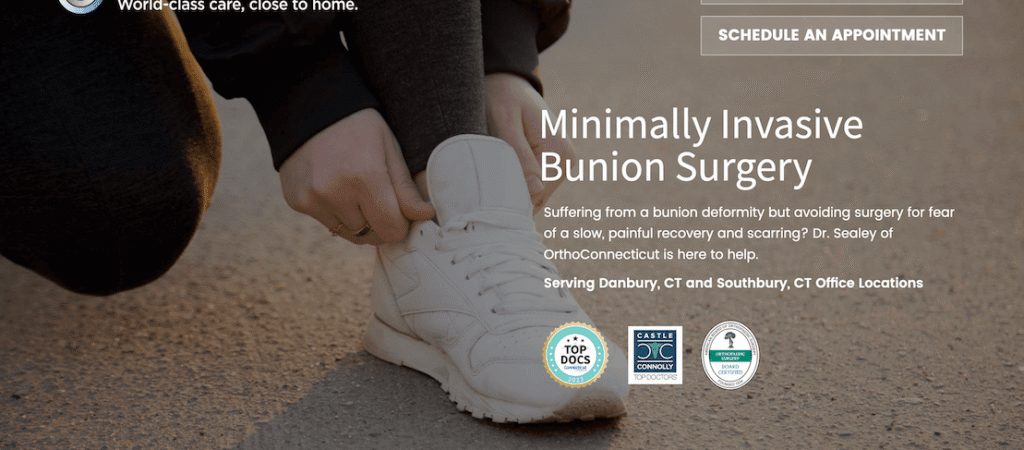
Show visitors that you understand the problem that brought them to the page. Describe what they are experiencing in language that feels familiar, explain how the issue affects them, and then introduce your solution.
The goal is not to exaggerate the problem or create fear. It is to make people feel understood and show them a credible path from their current frustration to their desired outcome.
Here’s an example from the same campaign we ran for OrthoConnecticut:
Benefits and Features
Explain what your product or service includes, but always connect those features to something the customer values.
Rather than simply listing what you provide, explain how it will save time, reduce risk, improve results, or make the process easier. This is also where you should clarify what makes your business different and why someone should choose you over the available alternatives.
Frequently Asked Questions
Use the FAQ section to address the questions and objections that may still prevent someone from taking action. These often involve cost, timing, process, eligibility, commitment, or what happens after the form is submitted. Addressing objections directly on the page and tackling buyer fears head-on can significantly lift conversion rates.
Your sales team is one of the best sources for these questions. If prospects repeatedly raise the same concern before moving forward, address it directly on the page.
A/B Test Your Landing Page
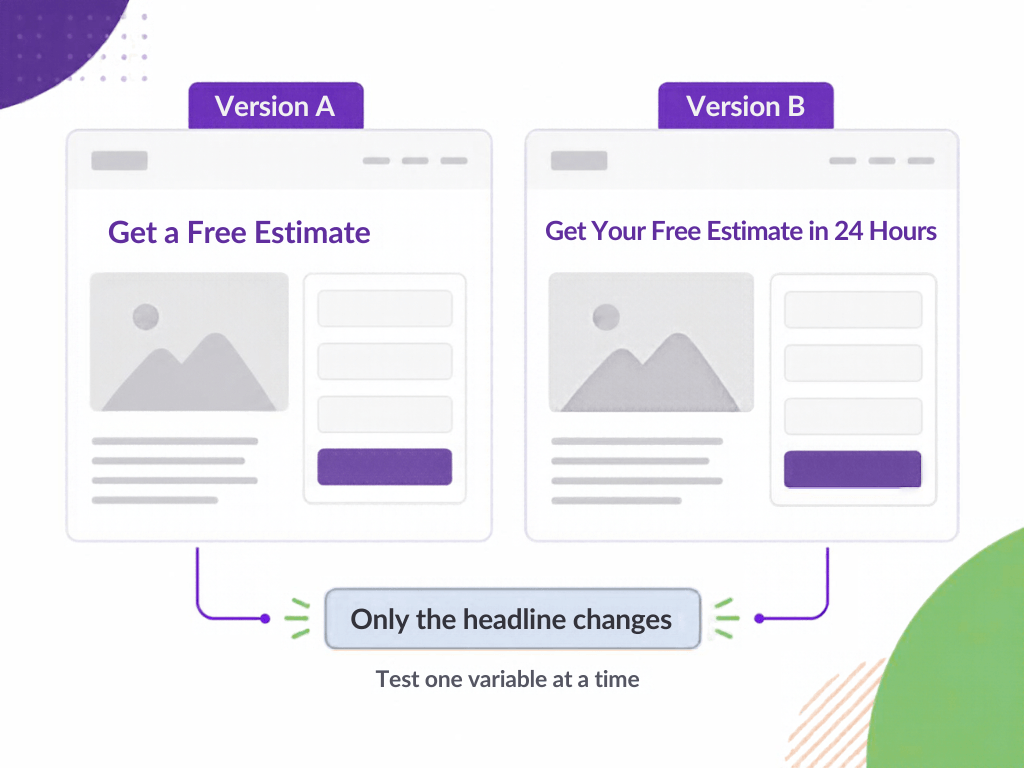
A/B testing helps you compare two versions of the page to measure which one generates more conversions.
We recommend only testing one variable at a time so you can clearly identify what variable is responsible for better performance. Changing several elements at once may improve results, but you won’t know which change made the impact.
Here are the elements you should consider A/B testing:
- Visuals
- Call to action copy
- Offers
- Value proposition
- Headlines
- Social proof
Pro Tip: Avoid ending a test too quickly. A small number of clicks or conversions can produce misleading results, so allow enough traffic and time to identify a meaningful pattern. Once you find a stronger version, use it as the new starting point and continue testing.
In our experience, the most valuable tests often focus on the page’s core message rather than minor design details. A clearer value proposition or more compelling offer is usually more impactful than changing a button color.
Keep in mind, some Google AI settings can send visitors to a different page than the one you chose, which muddies a controlled test. Turn that setting off or add URL exclusions while you test to avoid this issue.
Turn More Ad Clicks Into Qualified Leads
A successful landing page does more than look polished. It connects the right audience with a clear message, a compelling offer, and an easy next step. When each part works together, your advertising budget has a much better chance of producing meaningful business results.
As a certified Google Partner, Brandmark Studios helps businesses plan and manage Google and Meta advertising campaigns, create tailored landing pages, and implement accurate conversion tracking to generate more qualified leads from their ad spend.
If you’re ready to launch or improve your existing campaigns, schedule a free consultation to discuss your goals, or explore our digital advertising services to learn more about how we can help.
FAQs
What is a good landing page conversion rate?
Start with benchmarks that match your industry, traffic source, campaign type, offer, and conversion action. A free download will naturally convert differently than a high-value consultation request. However, your most useful benchmark is your own performance across similar campaigns. Once you have enough data, focus on improving that baseline while also monitoring cost per lead and lead quality.
Should Google Ads send visitors to my homepage or a landing page?
A dedicated landing page is almost always more effective. It matches the ad’s message and removes the distractions of full site navigation, so visitors don’t have to hunt for the thing they clicked to see.
Do I need a separate landing page for every campaign?
Not always, but campaigns targeting different audiences, services, or search intentions should usually have tailored landing pages.
How long should a landing page be?
It should be long enough to explain the value, build trust, and overcome objections. Simple offers may need less copy, while expensive or unfamiliar services require more detail.
How many calls to action should a landing page have?
Use one primary action throughout the page, repeated at natural points so visitors can convert whenever they are ready.
Do I still need a landing page for ChatGPT Ads?
Yes. Every ad still sends people to a page after the click, and that page decides whether the visit becomes a lead. ChatGPT ads are new and still rolling out, but the basics in this guide apply on any platform.